

Beyond Symptom Relief: The Next Wave of the Allergy Solutions Is Synergy Effect

As Demand for the Allergy Solutions Rises, What Do Consumers Really Care About?
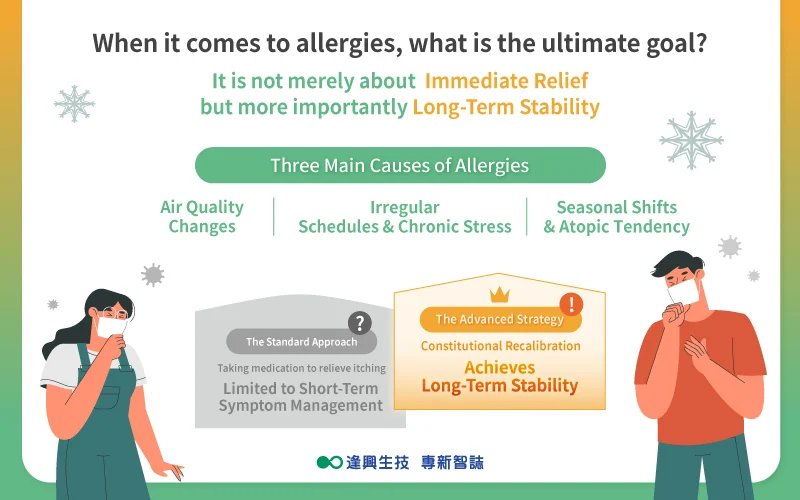
Why are more people experiencing allergic reactions in recent years?
This trend is closely linked to changes in living environments and rising stress levels. In recent years, more people have reported struggling with allergies—even when they can’t identify a single clear trigger. A common pattern often emerges: when the weather shifts, air quality worsens, or work-related stress disrupts sleep, a wave of uncomfortable allergy symptoms start to appear.
According to the Ministry of Environment’s 2022 Taiwan Air Quality Annual Report, PM2.5 levels frequently exceed the WHO’s latest recommended limits during fall, winter, and spring. This can easily irritate the respiratory tract and surrounding tissues, leading to symptoms such as frequent sneezing, a runny nose, itchy eyes, skin redness, and even gastrointestinal discomfort. While these reactions may not always be severe, they often recur.
On top of that, irregular routines and prolonged stress can increase the body’s sensitivity over time—making allergies not just occasional flare-ups, but a persistent, recurring issue.
If medication can relieve symptoms, why do they often return?
When allergy symptoms flare up, antihistamines, steroid creams, or oral medications can provide short-term relief. However, once the treatment stops, the symptoms often return. This is because these medications only reduce allergy symptoms—they do not address the immune system’s underlying sensitivity to external triggers.
As a result, more people are turning to strategies that support long-term immune balance, such as taking probiotics, avoiding specific food allergens, or choosing products with simpler, cleaner ingredients. Expectations for health management are shifting: it’s no longer just about relieving symptoms in the moment, but about achieving lasting stability and fewer flare-ups.
Gut Flora, Inflammation, and the Whole Immune System: Where Should Body Balance Begin?
Many people start by focusing on digestion—but is that really the root of the problem?
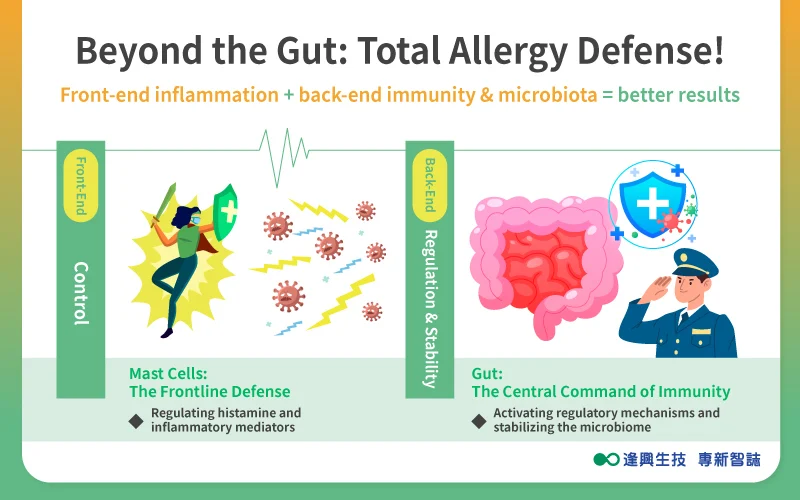
Mechanistically, allergic reactions are triggered not by the digestive tract itself, but by mast cells distributed throughout the body. Like frontline soldiers on a battlefield, mast cells release histamine and other inflammatory mediators as soon as IgE antibodies bind to them. It can make you keep sneezing and runny nose, accompanied by rashes, itchy eyes, bloating, and diarrhea.
At the same time, the gut—our largest immune organ—houses over 70% of the body’s immune cells. It acts as the body’s command center, training the immune system to respond appropriately and maintain tolerance.
Optimizing overall health requires a multi-layered approach: addressing initial triggers, modulating immune response intensity, and maintaining long-term gut flora stability.
Still seeing recurring allergies?
Curious about the logic behind synergistic immune defense?
→Contact us to read the full article!




Wel-Bloom Bio-Tech
Leader of Jelly Supplement
-
Phone +886-2-33225555
-
Fax +886-2-3322-5966
-
Email [email protected]
-
LINE Official Account @welbloom
-
LinkedIn Welbloom BioTech
Contact Us
We will reply them as soon as possible.